The words “inheritance tax” do not actually appear in the title of the initiative. The full name is “For a social climate policyExternal link – financed through fair taxation (Initiative for a Future)”. Swiss voters will cast their ballots on November 30.
What is it about?
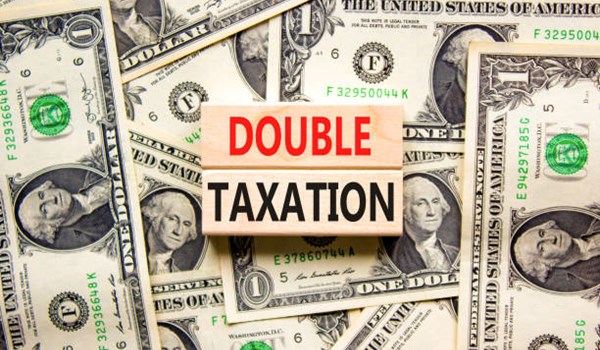
In common parlance, the proposal is referred to as the “inheritance tax initiative”. This is because it aims to introduce an inheritance tax on very large fortunes.
Specifically, the text calls for a 50% tax to be levied whenever someone bequeaths or gifts more than CHF50 million ($63 million) to their descendants. The tax would be payable on the amount exceeding this CHF50 million. The funds generated would be used to combat climate change.
The initiative thus combines two aims: higher taxation of the largest fortunes on the one hand and measures to tackle climate change on the other.
These goals tie in with two global trends: tax-the-rich and climate justice. In 2024, for instance, the G20 countries resolved to push for higher taxes for the super-rich.
One proposal under discussion is a 2% tax on individuals with more than $1 billion (CHF1.6 billion) in wealthExternal link. The concept of climate justice (“carbon inequality”) has also been addressed globally for some time.
The federal government estimates that around 2,500 people in Switzerland have assets above CHF50 million. Together, they hold an estimated CHF500 billion. A study by the University of LausanneExternal link concluded that the initiative would mainly affect the around 300 households with assets of over CHF200 million.
According to business magazine BilanzExternal link, Switzerland is currently home to 152 billionaires. As such, it has one of the highest densities of billionaires in the world: 17 billionaires per million inhabitants.
Inheritance tax in Switzerland: the situation to date
Switzerland does not have a uniform, federally regulated inheritance tax. The individual cantons, and in some cases municipalities, set their own rules and rates. As a result, several dozen different taxation options exist.
In most cantons, direct descendants are exempt from inheritance tax or there are high exemption thresholds. The cantons of Appenzell Inner Rhodes, Vaud and Neuchâtel are exceptions here.
Inheritances are taxed at the relatively low average rate of around 1.6% in the cantons. This was not always the case. “The tax burden on wealth and inheritances has been significantly eased over the past three decades,” a study by the University of LausanneExternal link found.
A federal tax on inheritances worth over CHF2 million was already mooted in 2015. The proceeds were to be used to fund the old-age and survivor’s insurance (OASI) pension system. When it came to the vote, however, the initiative – which was put forward by the Evangelical People’s Party, the Social Democrats and the Greens – was resoundingly rejected by the people, with 71% against, and by the cantons.
Of note for the Swiss Abroad and their descendants: if a testator’s last residence was abroad, there is usually no inheritance tax in Switzerland.
How does Switzerland tax high-net-worth individuals?
Here, the situation is even more uneven, as wealth taxExternal link is the responsibility of both the cantons and the municipalities. The federal government stays out of it.
Wealth tax is only due if a person’s assets exceed a fixed exemption threshold. In some cantons this is CHF100,000 while in others it is CHF1 million. This makes the Swiss wealth tax – which is unique in the world – a real “tax on the rich”.
Wealth tax rates are progressive in most cantons, meaning that the higher the assets, the higher the tax rate. As a result, the richest 10% pay around 86% of wealth tax.
As part of a study, economists from the federal technology institute ETH Zurich calculated the tax burden of Roche heir André Hoffmann. His estimated assets amount to around CHF2.6 billion. According to the institute’s model calculationExternal link, Hoffmann pays some CHF20 million in taxes on this wealth annually in canton Vaud.
Switzerland thus does have a “minimum tax for the rich”, writes the KOF Swiss Economic Institute, which is part of ETH Zurich. The wealth segment of the super-rich targeted by the initiative is thus already contributing to tax revenues. In 2022, CHF9 billion poured into the cantons and municipalities from wealth tax, making up one-tenth of their total revenue.
Nevertheless, Switzerland is considered a tax haven for the rich. This is due to the low tax rates in individual cantons and the lump-sum taxationExternal link for a few thousand super-rich foreign nationals who are domiciled in the country. They benefit from an expenditure-based flat rate on their high assets.
What do the initiative’s proponents say?
According to the Young Socialists – the youth wing of the country’s left-wing Social Democratic Party – the rich should pay more for climate protection because they produce more CO2 through their lifestyle. “To achieve the ambitious climate goals for 2050, investments of around CHF12 billion would be needed in Switzerland each year,” they argue.
“The super-rich made their wealth by exploiting people and nature. It is time they were made to pay for their climate crimes,” says the party’s vice-president, Nathalie Ruoss. The proceeds are therefore to be used to implement sustainable projects in the fields of housing, employment and public services.
If the inheritance tax initiative is adopted, the initiators expect it to generate an additional CHF6 billion in revenue.
And the opponents?
The opponents, including the federal government, calculate things differently. According to estimates by the University of Lausanne, between CHF2.5 billion and CHF5 billion in additional taxes would be collected if the initiative were accepted.
But only if there is no exodus from Switzerland. The opponents reckon that the super-rich and entrepreneurs could well decide to relocate abroad. “On balance, the initiative could therefore lead to a drop in revenue,” the federal government warns. It estimates that, if the initiative is accepted, some 85-98% of the tax base of these individuals would be lost – that is, between CHF2.8 billion and CHF3.7 billion.
By contrast, the new inheritance and gift tax would only generate an estimated CHF100 million to CHF650 million.
Prominent figures who would be affected by the measure also argue that a large chunk of their assets are locked in their companies. These would have to be sold in order to pay the tax, they warn. Moreover, they point out, wealthy entrepreneurs create jobs and keep Switzerland competitive as a business location through innovation and investment.
So is everything clear now?
Not entirely. The initiative also contains a controversial retroactive clause. Could the super-rich be brought to account even if they have already left Switzerland? This would presumably have to be decided by the courts, if the initiative is adopted. What is clear, though, is that the proposal calls for measures “to prevent tax avoidance, in particular with regard to departures”. The bill further stipulates that the tax would be due immediately after a “yes” vote – so with retroactive effect. This is another reason why the initiative triggered such nervousness among business circles.